
Current vacancies
For the area of personal assistance
- Full-time or part-time team leader (min. 30 hours/week) - Job profile ►
- Personal assistance in Hemhofen - Job profile ►
- Personal assistance in Erlangen „Anita“ - - Job profile ►
- Personal assistance in Herzogenaurach „Rene“ - - Job profile ►
For the Participation Counseling Center Northeast Franconia (EUTB®)
- Social education worker - Job profile ►
For the Counseling.Education.Encounter. (OBA)
- Internships for students - Job profile ►
Become part of our team now
Unsolicited applications are always welcome.
Applications by email to: briefkasten@zsl-erlangen.de
Persönliche Assistent:innen können sich auch online per Bewerbungsformular bewerben.


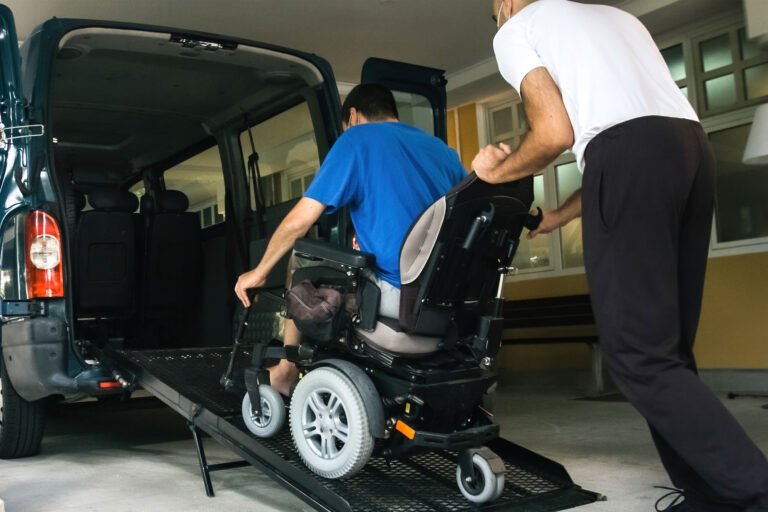

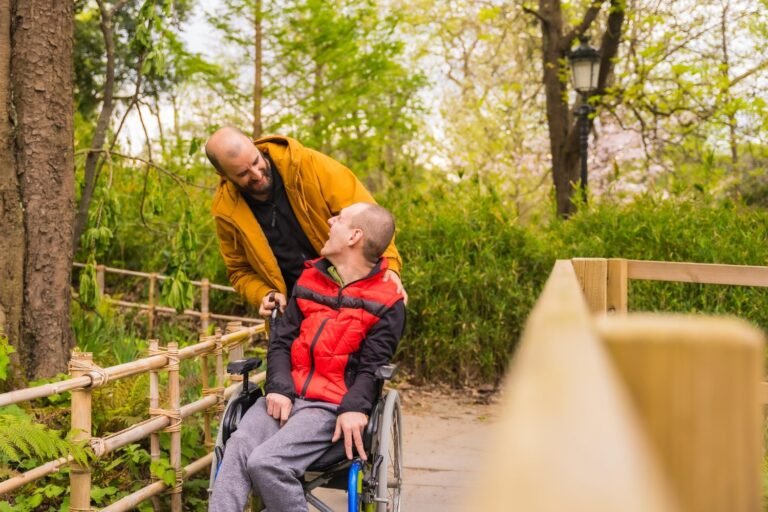
The Zentrum für Selbstbestimmtes Leben Behinderter e.V. (ZSL e.V.) in Erlangen is committed to enabling people with disabilities to lead a self-determined and active life.
To strengthen our team we are looking for committed Assistants (m/f/d).
We are looking for reliable people who take responsibility and are open and empathetic to different life situations.
Together
Participation
enable
Why
Personal
Assistance
is more
as a job
Personal assistance creates the basis for social participation. At the same time, this work offers great personal and professional development opportunities:
Sensitivity to the reality of life for people with disabilities
varied tasks
A sense of achievement in everyday life
Assuming social responsibility
Appreciative feedback from assistant users
As an assistant, you usually work with a permanent person and accompany them in their everyday life.
Trusting cooperation forms the basis of your work. With interest, courage and openness, you will grow into this meaningful task.
Before you apply as an assistant, please think briefly about whether the job is a good fit for you:
Are you prepared, if desired, to spend longer shifts (up to 24 hours or more) with a person who is initially a stranger and to adapt to their wishes and habits in everyday life (e.g. daily routine, leisure time, household, tidiness)?
Can you imagine helping with personal hygiene?
Do you deal with closeness, potential conflicts and feedback in a respectful and solution-oriented manner?
No training or previous experience is required: you will be trained individually. If you have experience or training in the social, nursing or medical field, you are also very welcome.
Their use as
Assistant
- Requirements
Possible
Areas of responsibility
Depending on the needs of the person receiving assistance, your activities may include
Support in the personal environment
Accompaniment for activities outside the home
Nursing support
Help in the household
On-call duty as well as night, weekend and holiday shifts
Specially qualified specialists are deployed for assistance users who require ventilation.
The assignments are based on the individual needs of our customersinside.
Weekend, public holiday and night on-call duties are **jointly agreed with the assistants.planned inside**.
Working hours &
Planning





Depending on the child's support needs and illness, school support (school/university) or inclusion support (crèche/kindergarten) is provided by auxiliary staff (without pedagogical training), qualified auxiliary staff (at least 2 years of pedagogical training, e.g. nursery nurses), and qualified support staff (at least 2 years of pedagogical training, e.g. nursery nurses).and specialists (at least 3 years of pedagogical training, e.g. educatorsinside).
Roles and qualifications in mentoring
The aim of school support as an inclusion aid
School support enables young people with disabilities or chronic illnesses to learn together with others at school and supports their participation in everyday school life.
School support serves the principle of equality: the child should not be disadvantaged by their impairment. However, the support must not create any advantages in performance assessments either.
Principle: Compensation instead of advantage
As much help as necessary - as little as possible
An important guiding principle is: as little help as possible, as much as necessary. It often makes sense to wait and give the child time to try things for themselves. This requires patience and empathy. Intervening too quickly can lead to children relying too much on support and becoming passive. School support therefore requires good observation skills and the right instinct for when to intervene.
The teacher leads the lesson and bears pedagogical responsibility for all pupilsinside. School companionThe school companion supports the accompanied child in following lessons and implementing instructions, but does not take on any teaching tasks. The use of school escorts must not replace or reduce the direct contact between teacher and pupil.
Clear distribution of tasks in the school
Responsibility: Focus on the accompanied child
School companions are responsible for the accompanied child, not for other children or young people in the institution.
A good balance is needed between support and freedom: even if continuous support may be necessary at times, young people always need space to develop independence. The right solution is found in consultation between the institution and the school mentor.
A good balance between proximity and distance
Working hours and vacations
The working hours are usually Monday to Friday, from the start of lessons until the afternoon. There is normally no supervision during the school vacations.
 Deutsch
  English
  Français
  Español